


The Future of Digital Posters in India
Insights into how digital posters are transforming marketing for Indian businesses.
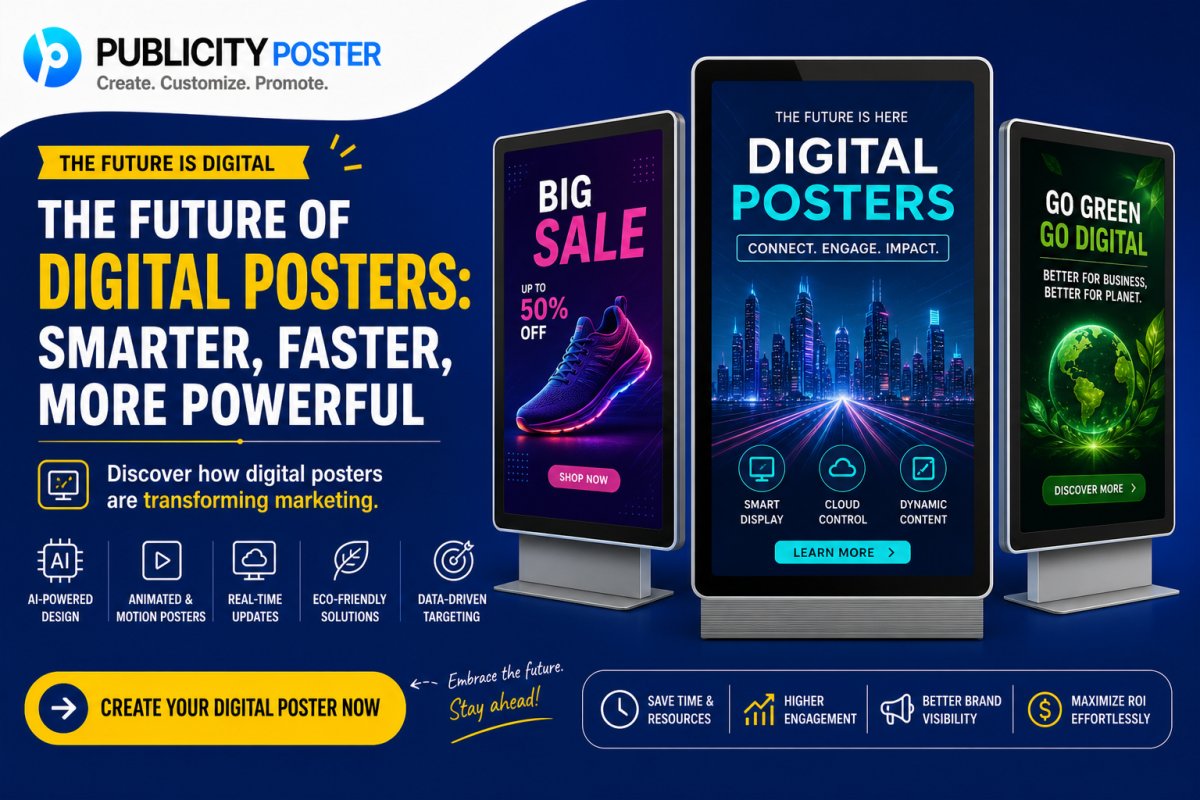
India’s marketing scene is evolving fast. As more businesses go digital, static print posters are becoming just one piece of the puzzle.
Digital posters—screens, LED displays, interactive signage—are stepping into the spotlight.
If you're wondering why everybody’s talking about digital posters, or whether they’re right for your business, here’s a look into where things are headed.
What are Digital Posters, and Why the Hype?
Digital posters (or digital signage) are essentially display screens that show dynamic content—images, animation, video, sometimes interactive features.
They differ from traditional posters because content can change, update in real time, adapt, and respond to context (time of day, special events, etc.).
In India, these are being used:
-
on street‑sides as LED billboards
-
inside malls and retail stores
-
at transportation hubs (bus stops, metros, airports)
-
for interior decor and welcome boards in offices, cafés, restaurants
They’re more flexible, often more noticeable, and allow for fresher content than static posters.
Key Trends That Signal Big Growth
Several factors point to digital posters becoming much more central in Indian business marketing in the next few years.
-
Market Growth Is Strong
The India digital signage market is expanding at a fast clip. A recent IMARC report shows it grew to about USD 940.5 million in 2024 and is projected to reach around USD 3,415 million by 2033, with a CAGR (compound annual growth rate) of ~14.25%.Another forecast sees revenue rising significantly by 2030. Even modest growth trajectories reflect big opportunities.
-
Technology Is Getting More Affordable & Capable
Screens are better, LEDs are brighter, energy efficiency is improving. Also, the cost of displays is falling. So businesses of all sizes—not just large brands—can invest in digital posters.Add in features like transparent LEDs, video walls, and interactive touchscreens, and you have more dynamic ways to present brand messages.
-
Smart Cities & Public Infrastructure Push
Government plans (smart cities, improved airports, transit hubs) are pushing for upgraded public infrastructure. Part of that is information displays, digital signage for public communication, real‑time updates, etc. This creates more places where digital posters are relevant. -
Retail & Consumer Behavior Shifts
Indian consumers are more used to digital content, video ads, interactive displays. Retail spaces, malls, food courts, stores—they want more than static adverts. They want engagement. If a display can change message according to time, or show offers, they grab more attention.Also, with rising urbanization, more foot traffic in metro cities means more eyeballs on public displays. Tier‑2/Tier‑3 cities are catching up, which expands reach.
-
Analytics, Personalization & Interactivity
What makes digital posters especially powerful is their ability to be smart. Content can be localized, timed, changed based on events (weather, holiday, sales), even interactive (touchscreens, QR codes). This makes marketing more targeted and measurable.Businesses don’t just display — they can monitor, optimize, adapt. So ROI (return on investment) becomes clearer.
Challenges & What to Watch Out For
Despite the momentum, there are some hurdles and things businesses should keep in mind.
-
Initial investment & maintenance costs: Screens, electricity, content creation can cost more than printing static posters. There’s also maintenance (repairs, software updates).
-
Design quality & content planning: If you put up a digital display with weak visuals or outdated content, it can backfire. Stale or low‑quality content is noticed more when it's on screen.
-
Location & visibility: Even digital screens need prime locations. A fancy display hidden in a back alley doesn’t help. Placement, viewing distance, ambient lighting all matter.
-
Regulation & public policy: As displays proliferate, municipal laws, permissions, public safety, light pollution, aesthetics become relevant. Businesses need to comply with local rules.
-
Electricity & sustainability: Screens consume power. In places where electricity is expensive or variable, running large digital posters non‑stop can cost and impact sustainability. Energy efficient displays help, but planning is needed.
How to Make Digital Posters Work in 2025 & Beyond
If you’re considering using or scaling up digital poster usage, here are practical tips to leverage them best:
| Strategy | Why It Helps |
|---|---|
| Use dynamic content that changes often (time of day, specials, events) | Keeps audience engaged; avoids “poster blindness.” |
| Combine digital posters with digital marketing (QR codes, social media tie‑ins) | Drives cross‑channel engagement—screens attract; mobile clicks convert. |
| Start small in high‑impact spots | Test ROI, content type, visibility before big rollouts. |
| Monitor engagement & metrics | Track which content gets views/interactions; adjust accordingly. |
| Focus on content design & clarity | Bold visuals, readable fonts, enough contrast; simple messages work best. |
| Plan for power & maintenance | Budget for energy costs and upkeep; avoid dark or dim displays; ensure screens are reliable. |
| Consider local languages & culture | India is diverse—content that resonates locally performs better. |
What the Future Likely Holds
Putting it all together, here’s a look at how digital poster usage in India is likely to evolve:
-
More DOOH (Digital Out‑Of‑Home) Signage: Bigger networks of digital billboards, video walls in public areas, interactive kiosks in malls, etc.
-
Hybrid Screens: Displays that combine physical poster style with digital capabilities (e.g. changing parts of the poster, embedded screens in traditional frames).
-
Integration with AI & Contextual Advertising: Think posters that change based on weather, time, audience demographics, or events. For example: coffee shop screen showing hot beverages in the morning, switching to dessert promos in evening.
-
More Real‑Time Content: Live updates, social media feeds, user‑generated content (with moderation) being shown on digital signage.
-
Sustainability Considerations: Lower‑power displays, solar powered screens, recyclable components, dimming for night use—more “green” digital posters.
-
Penetration into Smaller Towns: As costs come down, digital posters will become more accessible to smaller businesses, even in tier‑2 and tier‑3 cities. This democratizes the medium.
Digital posters are not just a “nice upgrade”—for many Indian businesses, they’re becoming essential. As India grows more urban, more connected, more visual, the value of dynamic, engaging display technology only increases.
If you run a store, café, brand, or service business: investing in digital posters (smartly) can give you greater visibility, better engagement, and more flexible marketing tools.
Just don’t treat them like “static posters with screens.” Use the strengths—dynamic content, adaptation, interactivity—and you’ll see the difference.
What's Your Reaction?
 Like
0
Like
0
 Dislike
0
Dislike
0
 Love
0
Love
0
 Funny
0
Funny
0
 Wow
0
Wow
0
 Sad
0
Sad
0
 Angry
0
Angry
0

Hi, I’m Kalpana 👋 A passionate content writer who loves turning ideas into simple, engaging, and result-driven content. I specialize in creating blog posts, marketing content, and practical guides that help businesses grow and connect with their audience. My focus is always on clarity, value, and writing that actually makes an impact—not just fills space. At Publicity Poster, I write content that helps businesses understand how to promote themselves better, create stunning posters, and grow faster using smart tools. When I’m not writing, I enjoy exploring new ideas, learning about marketing trends, and finding better ways to communicate complex things in simple words. 💡 I believe: Great content is simple, useful, and powerful.








Comments (0)